Article Summary:
Blending artificial turf and pavers is one of the most popular modern landscaping trends—and for good reason. The combination creates a clean, stylish, and low-maintenance outdoor space that brings together the beauty of a green lawn with the practicality of hardscaping. Whether you’re dreaming of a cozy patio, a backyard putting green, or a sleek backyard oasis, integrating pavers and artificial turf can transform your yard into a show-stopping living space.
In this guide, we’ll walk you through the steps and considerations for installing pavers with turf, along with tips and ideas to help you achieve a cohesive and professional-looking finish.
The combination of pavers and grass brings the best of both worlds:
Unlike natural grass, fake grass requires no mowing, watering, or reseeding—making it ideal for spaces where upkeep and aesthetics both matter.
Before you start your turf installation, take time to plan out your backyard landscape layout. Think about how you want the area to look and function.
Ask yourself:
Sketch a rough plan to decide where to place pavers with artificial grass and how to best integrate the two for flow and symmetry.
Here’s what you’ll need to install artificial grass and paving ideas together:
Optional: edging materials or composite bender board to frame the design.
Excavate the area to a depth of about 4 inches. Remove any sod, debris, or old natural grass. If you’re working over an existing concrete slab, you can build up the base using foam or shock pads under the turf and place pavers directly on top or alongside.
Next, fill the area with a compactable base material (like crushed rock or decomposed granite) and level it out thoroughly. This ensures drainage and a flat, stable surface for both the pavers and the turf.
Lay out your concrete paver design first. You can go for straight lines, curves, stepping stones, or checkerboard layouts. Once you’re happy with the placement:
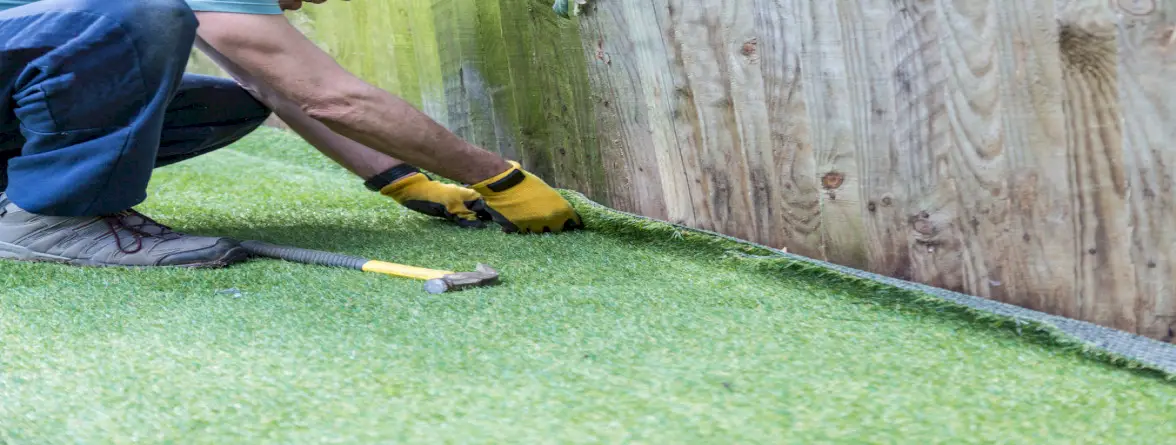
Once your pavers are in place, it’s time to install artificial grass. Cut the turf to fit between and around the pavers using a utility knife. Be sure to align the synthetic turf so that the blades face the same direction for a consistent appearance.

Use turf nails or adhesive to secure the turf to the base, depending on whether you’re working on soil or a concrete slab.
When laying turf:
After installing your pavers with turf, inspect for any loose edges or uneven seams. Add infill if necessary and brush again to lift the blades.
Need inspiration for your next project? Here are some creative ways to use artificial grass and paving ideas in your yard:
These combos are perfect for adding elegance and comfort to both small patios and expansive lawns.
One major benefit of artificial grass is its low maintenance, especially when installed alongside pavers.
Here’s how to keep your space looking sharp:
Avoid using harsh chemicals or tools that could damage either the pavers or turf.
Blending artificial turf and pavers is a fantastic way to bring texture, color, and structure to your outdoor space. The look is clean, contemporary, and requires little upkeep—making it ideal for busy homeowners who still want a beautiful, usable yard.
By following proper turf installation techniques, using quality materials, and paying attention to design details, you can create a stylish and durable backyard oasis that enhances your home and expands your living space.
Ready to bring your vision to life? Contact NexGen Lawns today for help designing and installing your custom pavers and artificial turf layout. We’ll help you craft the perfect blend of style, function, and lasting value.